
School Playground Games: Fun Ideas With Playground Markings
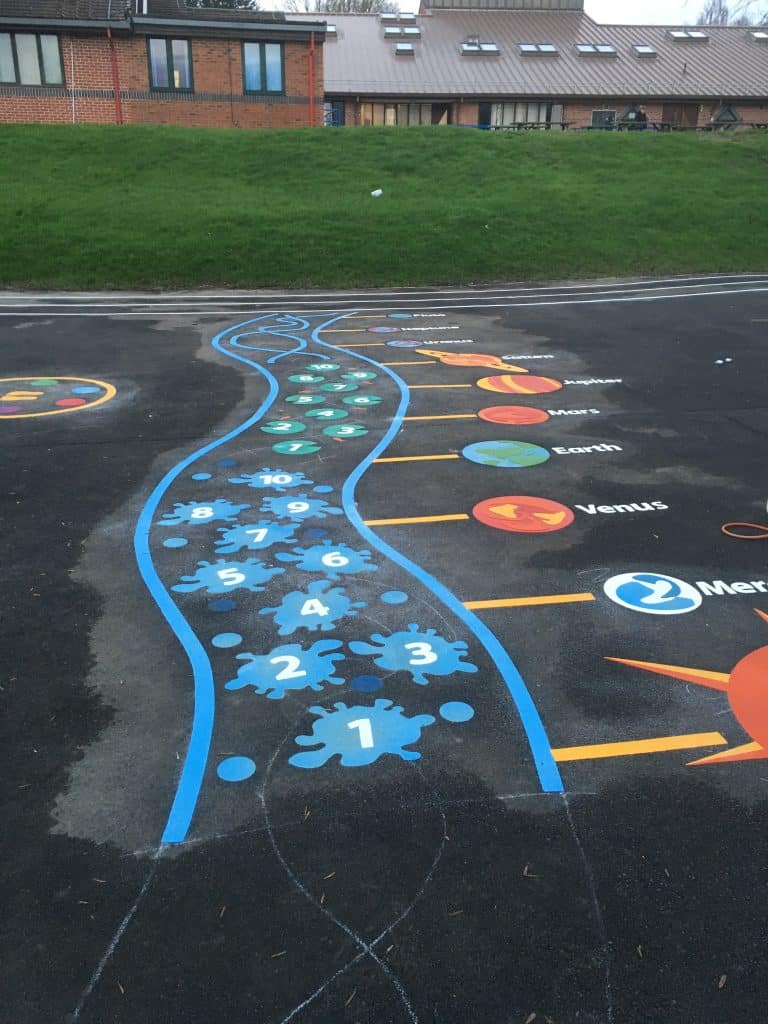
School playground games are the hopscotch grids, number games, target games, trails and courts that pupils play at break, at lunch and in PE lessons, and thermoplastic playground markings keep them laid out and ready to play every day without equipment or setting up. Below, our team has gathered the games schools ask us for most, what each one develops, and how to plan them into your playground.
Which traditional playground games should a primary school mark out?
Traditional playground games such as hopscotch, snakes and ladders, four square and noughts and crosses are still the games primary schools ask us for most, because children already know the rules and can start playing on their own within seconds of the bell. Our traditional playground game markings give these classics a permanent, brightly coloured home on the tarmac, so they are there for every class, every day.
Hopscotch
Hopscotch never goes out of style. Children take turns hopping through the numbered squares, which builds balance and coordination, practises number recognition and teaches them to wait patiently while a friend has their go. We offer a wide range of hopscotch markings, from the classic numbered grid to more creative layouts that keep pupils coming back for more.
Snakes and ladders
A life-sized snakes and ladders board turns the board game into an active one. Pupils race up the ladders and try to avoid the snakes, which brings in some healthy competition, and teachers can use the numbered squares for counting and simple addition and subtraction, so number practice happens while children play.
Four square and number ladders
Four square courts and number ladders are low-equipment games that keep children moving with a single ball, or with nothing at all. They reinforce counting and coordination and work well in a small corner of the playground.
Noughts and crosses and giant board games
Enlarging board games on the playground brings strategic thinking outdoors. Noughts and crosses, chess and Twister-style grids all work as markings, and they encourage pupils to play together, take turns and talk through their moves.
Which educational playground games support maths and literacy?
Educational playground games such as number grids, alphabet trails and phonics markings let teachers take maths and English lessons outside, so pupils from EYFS through KS1 and KS2 practise numeracy and literacy while they move. They also give children an informal place to go back over what they have learned in class, which helps the understanding stick.
Number grid challenge
A giant number grid turns arithmetic into a physical game. A teacher calls out a sum and pupils jump to the correct answer, or children count on and back across the grid in pairs. Our number grid markings can be used for whole-class lessons or picked up by pupils at playtime.
Alphabet trail
Colourful letters are placed in sequence, and pupils hop, skip or jump from one letter to the next in the correct order. It reinforces the alphabet while children burn off energy, and older pupils can use the same letters for spelling games, jumping out a word letter by letter.
Phonics and letter games
Phonics markings help children who are learning to read and write develop their language skills outdoors. They are especially useful in the early years and KS1, where hearing, saying and jumping onto a sound gives children another way to remember it.
Puzzles and mazes
Mazes and puzzle markings build concentration and problem solving. Children follow a route, change direction and plan ahead, which develops their understanding of a subject in an informal setting and stands the test of time as a game.
Which active playground games work best for PE and fitness?
Active playground games such as target throwing, fitness circuits, adventure trails and court games give PE leads a ready-made outdoor teaching space, and they give pupils a reason to keep moving at break time, which adds to their daily physical activity.
Target throwing games
Whether it is a beanbag throw or ring toss, target markings give pupils a clear target to aim for. Our target markings develop hand-eye coordination, aiming and concentration, with an element of friendly competition between classmates.
Fitness challenge circuit
A fitness circuit sets out stations for activities such as star jumps, lunges and skipping, arranged so children move from one to the next. It makes exercise feel like an adventure rather than a lesson, and PE leads can use the same layout for agility work.
Adventure trails and mile trails
Trails marked with arrows, footprints and fun shapes guide children through jumping, skipping and balancing, and they are a favourite with younger pupils. A longer running trail around the edge of the playground also suits activities such as The Daily Mile.
Team games on sports courts
Team games keep pupils entertained and give them a structured place for competitive play. Mini football pitches and basketball and netball courts work for PE lessons and break-time games, and a playground with several court outlines lets more pupils play at once.
Musical movement and dance games
Dance markings outline squares with a move written in each. When the music plays, children jump onto a square and perform the move, combining music and physical activity in a game that suits all abilities.
Which imaginative and wellbeing playground games can a school add?
Imaginative playground games use themed markings such as nature trails, story scenes and treasure hunts to give children a setting for role play and invented games, while wellbeing markings help pupils understand and talk about their emotions.
Nature-inspired trails
Markings that look like animal tracks, leaves or flowers turn the playground into a place to explore. Children follow the trail pretending to track wild animals or step into a magical forest,, inventing their own stories as they go.
Storyline and themed play areas
Themed designs such as an enchanted forest, a space adventure, a pirate treasure map, a treasure hunt or scenes from favourite tales bring storytelling into playtime. They become the backdrop for role play, collaboration and creative thinking during break times.
Wellbeing and emotion games
We are seeing more requests for wellbeing and emotion-understanding games in primary schools. Creative markings that help children recognise and name their feelings can support key stages of their personal and social development, and give staff an easy starting point for conversations.
What do school playground games develop in children?
School playground games develop children's motor skills, social skills, creativity and fitness at the same time, and regular active play outdoors is linked to better mood, lower stress and improved focus back in the classroom. The table below shows what each type of game tends to build.
| Playground game | What it helps children develop |
|---|---|
| Hopscotch | Balance, coordination, number recognition and turn-taking |
| Snakes and ladders | Counting, simple addition and subtraction, healthy competition |
| Number and alphabet grids | Early numeracy and literacy, spelling and mental arithmetic |
| Target games | Hand-eye coordination, aiming and concentration |
| Trails and mazes | Motor skills, concentration and following a route |
| Fitness circuits and dance squares | Stamina, rhythm and confidence in movement |
| Sports courts | Teamwork, following rules and physical fitness |
| Themed areas and wellbeing markings | Imagination, collaboration and understanding emotions |
Good markings support both structured play, where children follow the rules of a known game, and free play, where they make up games of their own. A playground with a mix of the two gives every child something to do.
Which school playground games suit older pupils?
Older pupils in upper KS2 and secondary schools tend to prefer sports courts, active zones and competitive team games, so a playground for older children should give more space to those markings. Our team designs layouts for every age, from early years up to KS3.
Our sports court markings and active zones help teenagers stay active while building teamwork and social skills. Our in-house design team can also work your school logo and colours into the design, which reinforces the school's ethos and gives pupils a sense of pride and belonging.
Why choose thermoplastic playground games over painted ones?
Thermoplastic playground games last far longer than painted ones because the markings are heat-bonded to the tarmac, so they resist fading, peeling and cracking under heavy footfall and British weather, and they keep a slip-resistant surface when the playground is wet.
- Durability: our markings carry a manufacturer's warranty of up to 4 years, subject to ground condition, and we have seen them last over 10 years.
- Slip resistance: the anti-slip finish makes the games suitable all year round, including wet winter playtimes, and suits nursery children as well as older pupils.
- Quick installation: our team pre-designs each marking, and our installers apply it with heat, with no building work needed. Markings are ready to use within 30 minutes.
- Colour that lasts: UV-stable, fade-resistant colours keep the games inviting, which encourages children to spend more time outside, even on colder, shorter days.
- Cost: prices start from around £50 for a single design (indicative, excluding VAT), so a school can begin with a few games and add more over time.
How should a school plan its playground games layout?
A school should plan its playground games by looking at the size and shape of the space, asking pupils what they want to play, mixing active, educational and quieter games, and making sure every child, whatever their ability, has somewhere to join in.
- Consider your space: map out the playground so there is room for children to play on their own and in teams, and so busy games do not crowd quieter areas.
- Ask the children: pupils are the best judges of which games they will actually play, so ask a class or school council for their ideas.
- Mix education with fun: include numbers, letters or geography so the playground supports what is taught in class.
- Think inclusively: choose markings that children of all abilities can enjoy, so nobody is left on the edge of the playground.
- Balance structured and free play: add some games with clear rules and some open designs that children can turn into games of their own.
- Refresh worn games: if older markings have faded, we can remove them as part of the project before installing the new layout.
How does Uniplay design and install school playground games?
Our in-house design team plans every layout around the school's own theme, curriculum and available space, and our DBS-checked installers fit the markings at schools, nurseries and councils across the UK and Ireland with minimal downtime for pupils.
You can choose traditional games from our catalogue, ask us for bespoke markings that are unique to your school, or combine the two. We also remove old or worn markings when a playground needs a fresh start. To talk through ideas for your playground, call our team on 0333 321 6699 or email [email protected] and we will be in touch as soon as possible.
Bring these ideas to your playground
A free design and a detailed quote, with no hidden costs and our price match promise.
All prices include installation, and every quote is fully itemised.
- Free design and site survey
- No obligation
- Our own in-house installation team
More guides
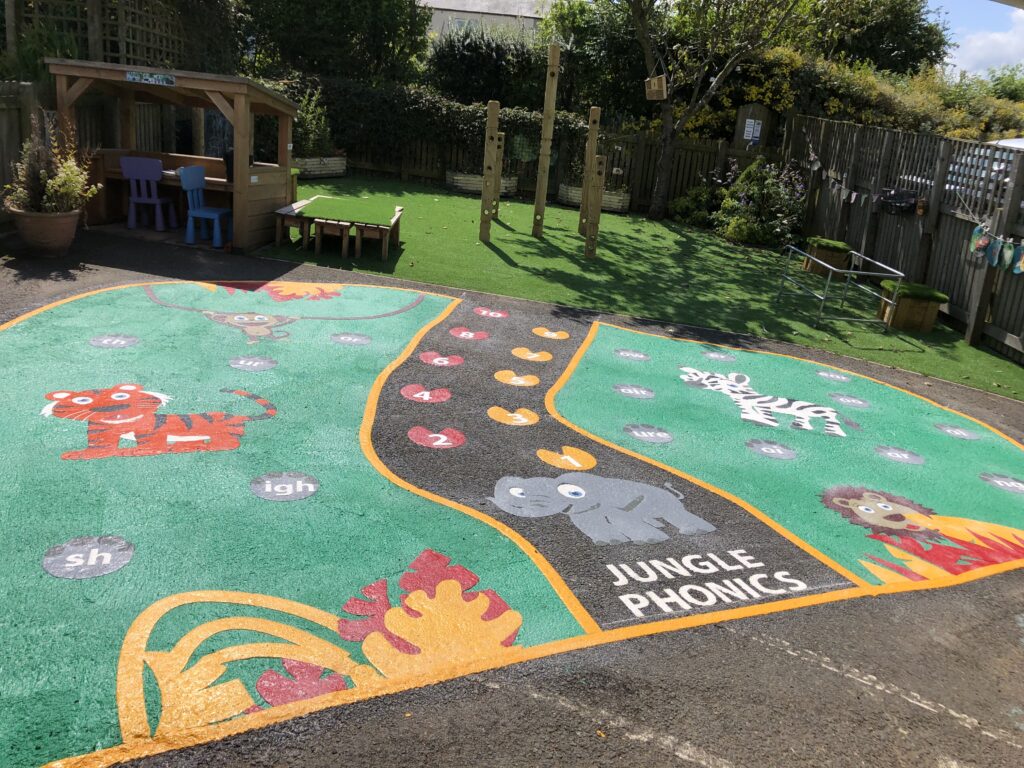
Teaching literacy with educational playground markings for KS1 and KS2
Playground markings are an innovative way of teaching literacy to primary school pupils in Key Stage 1 and 2. They can be used to support the development of
Understanding the guidance for outdoor sport and play in England
The guidance for outdoor sport and play in England is published by Fields in Trust, who are responsible for implementing and maintaining standards for all
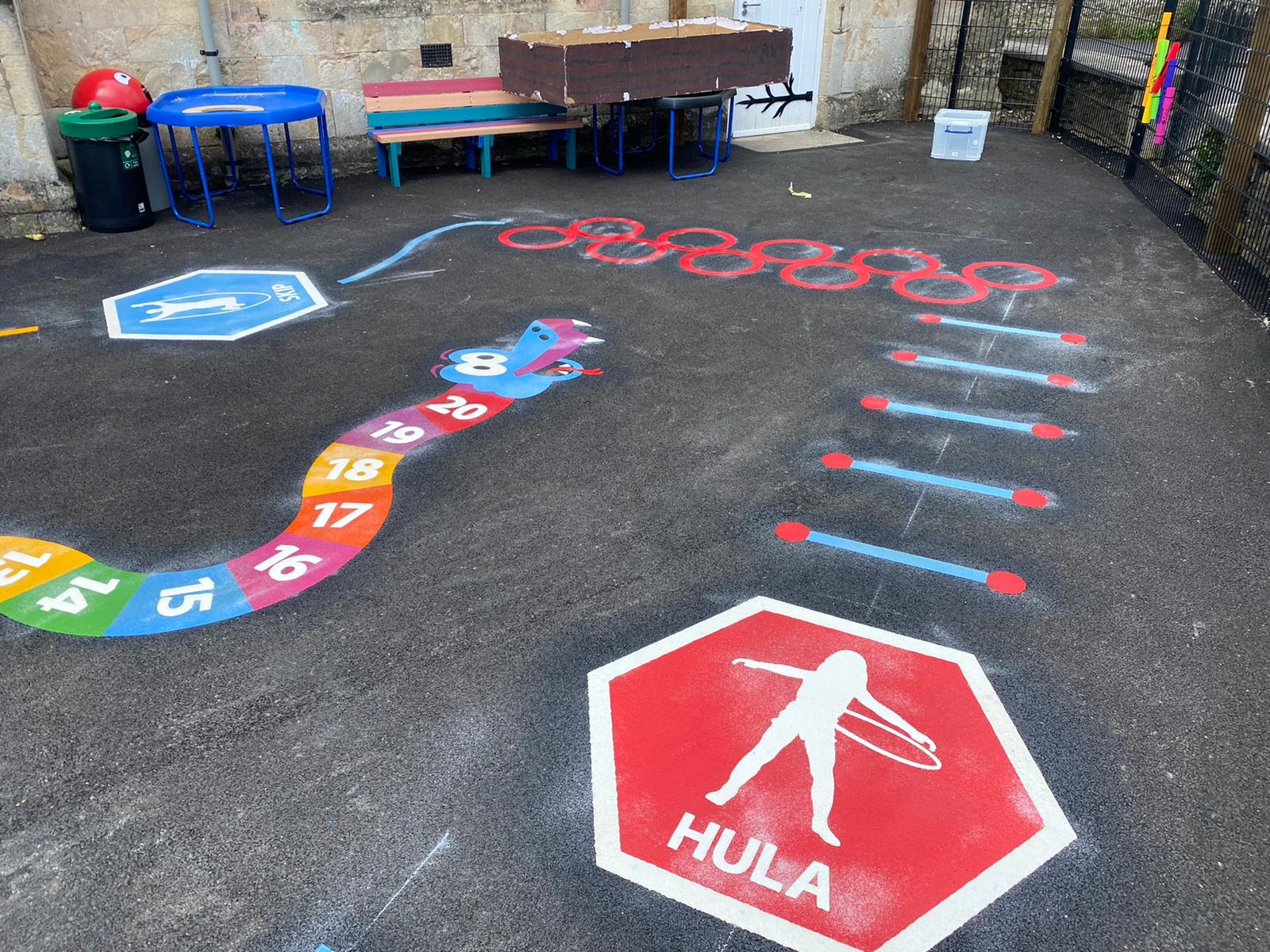
Winter Playground Activities to Keep Pupils Active Outdoors
Winter playground activities that keep primary pupils active outdoors, plus how to keep the playground safe and encourage outdoor play in colder months.