
Benefits of Playground Markings for Schools and Pupils
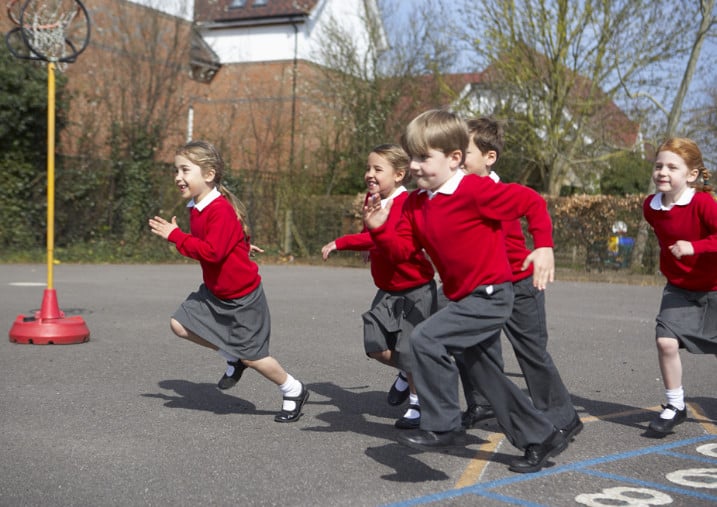
The benefits of playground markings for schools are more active break times, better provision for PE, stronger social and communication skills, fewer playground disputes and learning that carries on outside the classroom. Laid in thermoplastic on tarmac, the markings turn a plain playground into games, courts and zones that pupils of every age and ability can use every day.
How do playground markings increase physical activity at break times?
Playground markings increase physical activity at break times by giving children clear games, courts and routes to use the moment they step outside, so fewer pupils stand around with nothing to do. The NHS advises that children aged 5 to 18 should average at least 60 minutes of physical activity a day, and many children do not get that at home.
Markings work because they divide the playground into zones. A marked court invites a game of netball, football or basketball, a trail invites running and hopping, and a set of traditional games gives quieter children something active to join. A mix of markings matters, because it widens the appeal of being active to pupils who would normally sit out team sport. Many schools also add a looped route for the Daily Mile, so every class can go out and run without setting anything up.
How do playground markings support PE lessons?
Playground markings support PE lessons by giving teachers permanent courts, target lines and activity zones to plan around, so lessons stay varied and cover a wider range of games, sports and skills than a bare playground allows.
Having several courts and zones lets a PE lead tailor lessons to pupils with different interests and abilities, helping children find the sports they enjoy and giving them regular practice at the physical skills behind them. Sports court markings for netball, basketball, football and tennis are the backbone of most schemes, and target lines and fitness circuits add athletics and conditioning work alongside them.
How do playground markings help pupils learn group play and social skills?
Playground markings help pupils learn group play by giving them shared games with simple, visible rules, so children practise taking turns, negotiating, cooperating and settling disagreements with friends. Group games build communication and teamwork, while individual games teach patience, respect and empathy.
The playground is where many children make their first friends, and a game gives shy pupils both a reason and a structure to talk. Children who join in group play at a young age tend to develop cooperation, conversation and sharing skills sooner, and the shared experience strengthens friendships and builds confidence and independence. Markings also give children a framework to invent their own games and agree the rules.
Different types of marking encourage group play in different ways:
- Traditional games such as hopscotch, snakes and ladders, noughts and crosses and twister need no equipment and teach turn-taking and negotiation.
- Sports courts give defined areas for team games, where children learn fair play and how to work towards a shared goal.
- Imaginative play markings such as roadways, zebra crossings and fantasy landscapes lead to role play, where children pretend to be drivers, pilots or explorers and learn to see things from someone else's point of view.
- Educational games such as number grids, letter games and word searches let children play together while they learn.
Over time, regular group play builds conflict resolution, team spirit, sharing and healthy competition, and helps children see how their own input contributes to a group outcome.
Which playground markings help children with communication and emotional wellbeing?
Friendship stops, quiet areas, welcome zones and feelings check-in markings help children with communication and emotional wellbeing, because they give pupils a calm place to connect with others and simple words to describe how they feel.
For many children, making friends is one of the hardest parts of school life, and it is not something taught in lessons. A friendship stop gives a child who is on their own a place to stand and be noticed, and a quiet area offers a break from busy, high-pressure games. Our How Do You Feel Today marking includes common answers in its design, which helps children explain their emotional or physical state and gives staff a prompt to step in when a child is struggling. These designs sit within our sensory and SEND playground markings.
Other markings practise different kinds of communication:
- Foreign language markings, such as French phrases and a Spanish maze, reinforce language lessons and help pupils talk with classmates who are not native English speakers.
- Team games such as basketball and football build quick verbal and non-verbal communication.
- Catch and pass games practise the same skills at a gentler pace for children who find full matches too intense.
How do playground markings reduce conflict and bullying at playtime?
Playground markings reduce conflict and bullying at playtime by setting out clear zones, so active games, quiet chatting and calm activities each have their own space and children can choose to join in or step away and cool down.
A group of friends talking is less likely to stand inside the lines of a basketball court, and the basketball game is less likely to spill into the quieter area. Both groups get room to play the way they want, and there are fewer flashpoints. The benefit carries into the classroom too: Public Health England reported that physical activity improves social behaviour and peer relationships and reduces classroom disruption. A common explanation is that children who have used up their energy outside are less restless and more ready to learn when they come back in.
How do playground markings support learning across the curriculum?
Playground markings support learning across the curriculum by turning numbers, letters, maps and shapes into games, so pupils practise counting, times tables, early reading and spatial skills at playtime and teachers can take lessons outside.
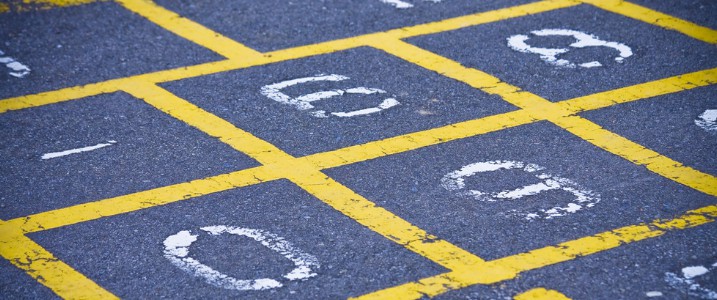
Children can practise addition and subtraction on snakes and ladders, chant times tables on a multiplication grid and count along number grid playground markings. Alphabet and word markings support early literacy, and compasses, grids and shape designs help children explore symmetry, angles and direction. Because children move while they think, the markings build physical and cognitive skills at the same time.
Puzzle markings work on thinking skills too:
- Problem-solving: mazes and challenges ask children to read patterns, plan a route, think logically and keep going until they find the answer.
- Memory and concentration: sequence and memory games train children to remember patterns, sequences and instructions, which helps build attention span.
- Spatial awareness: moving across grids and compass points helps children understand position, direction and orientation.
Used well, these markings reinforce classroom learning goals from the early years through to KS2.
How do playground markings develop balance and coordination in KS1?
Playground markings develop balance and coordination in KS1 by giving young children lines, spots and paths to walk, hop and jump along, which trains core strength, footwork, timing and spatial awareness while they play.
Balance and coordination are foundation motor skills that help children take part in physical activity, avoid injury and judge the space around them. In KS1 these skills are still developing and need regular, structured practice, and markings give teachers a permanent resource for both free play and PE lessons. Useful designs include:
- Tightropes and balance beams: narrow marked paths that children walk along, learning to control and steady their bodies while building core strength and concentration.
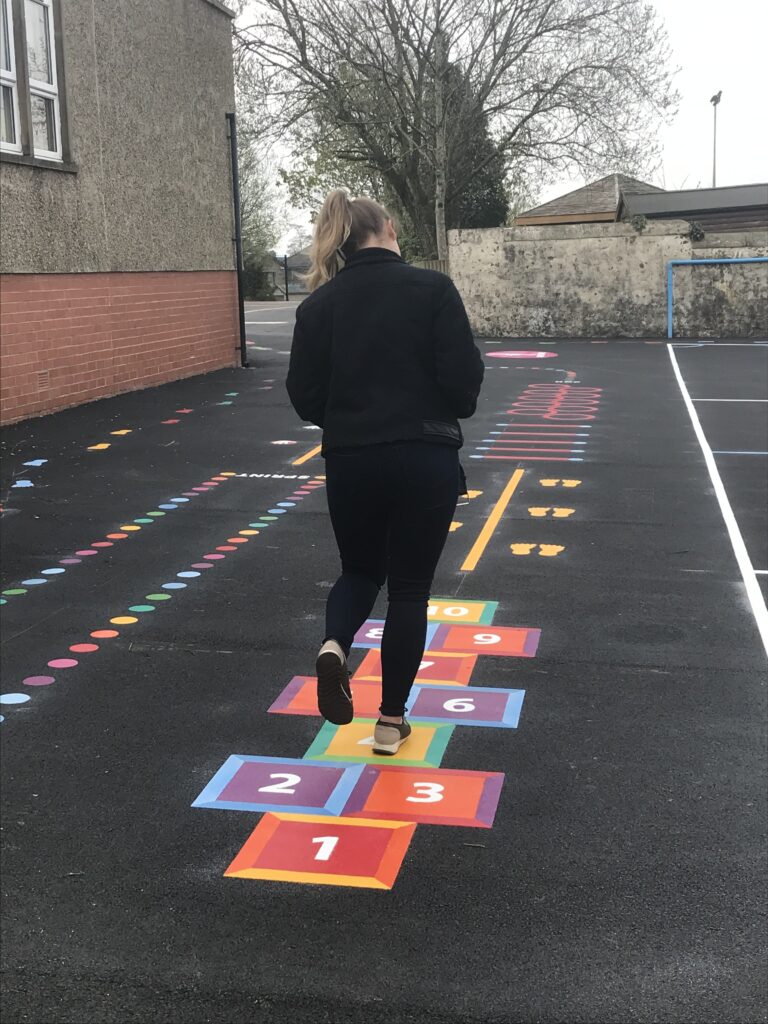
- Hopscotch: hopping on one foot and then switching needs coordination between legs and eyes, and improves timing and rhythm.
- Ladder drills: a ladder laid flat on the ground for footwork patterns that build agility, speed and coordination.
- Mazes, trails and pathways: children follow the route without stepping over the lines, which improves balance and asks them to make decisions as they go.
- Stepping stones: a row of stones across a pretend river encourages children to leap and land with control.
- Relays and obstacle courses: group activities built around the markings combine individual balance work with teamwork.
Encouragement from teachers and parents, and celebrating small achievements, makes a real difference to a young child's confidence.
Do playground markings benefit secondary school pupils in KS3 and KS4?
Playground markings benefit secondary school pupils in KS3 and KS4 by giving them courts, target lines and fitness circuits for sports practice, and shared spaces that help students in years 7 to 11 build friendships and a sense of belonging.
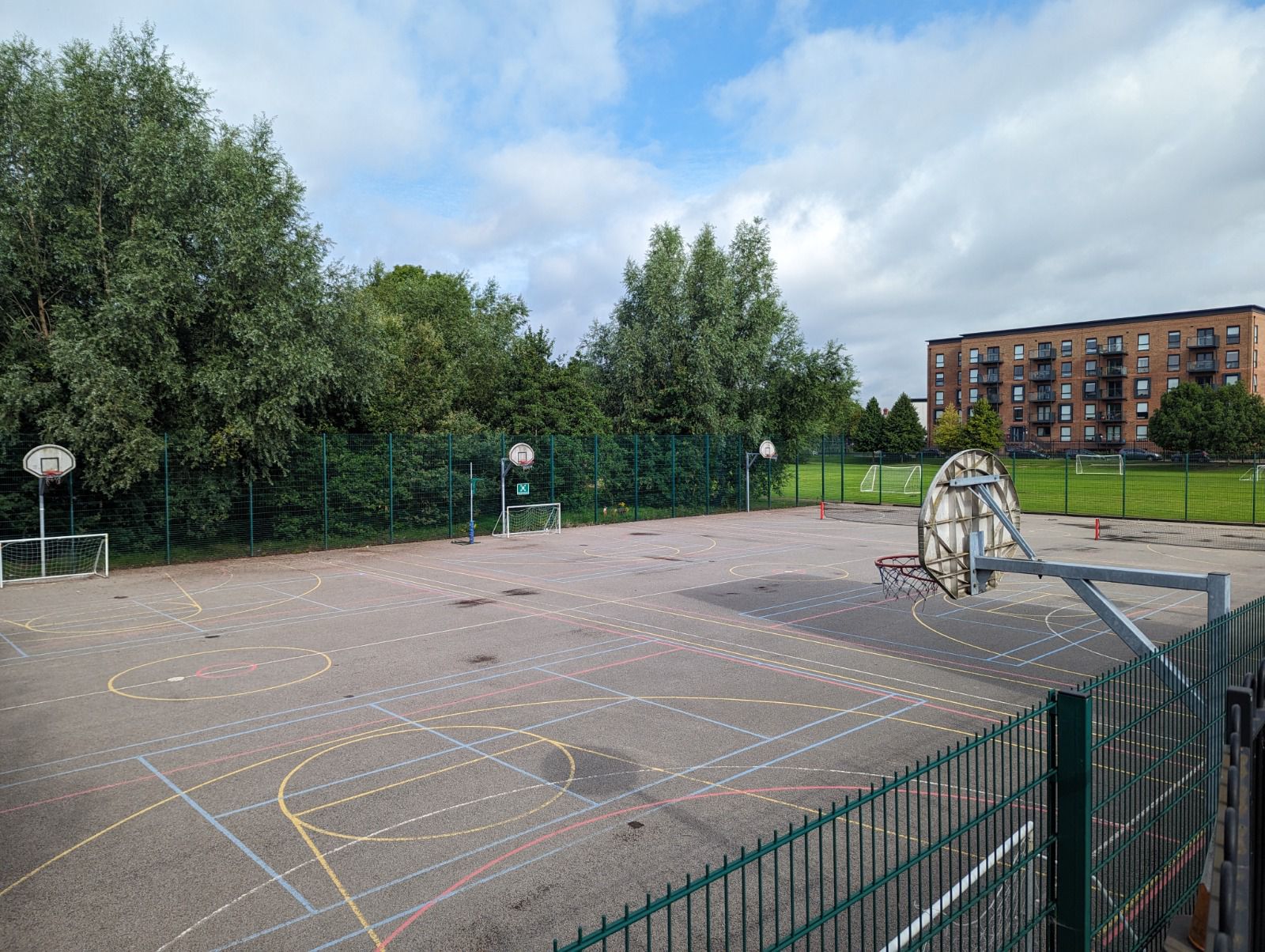
Secondary school is a time when young people are forming new relationships, and a games area or mini football pitch gives them a reason to mix. Court markings for basketball, netball and tennis, with target lines and athletics markings, let students practise technique and keep up regular exercise. Mazes, sensory paths and fitness circuits give students who are not drawn to team sport an equal chance to take part.
Are thermoplastic playground markings safe and long-lasting?
Thermoplastic playground markings are safe for pupils of all ages because they are non-slip and sit level with the ground, so they add no trip hazard, even for toddlers who are only just finding their feet.
A few simple steps keep a marked playground safe:
- Give children under 5 their own area with age-appropriate games, as younger children are less steady and more easily hurt.
- Supervise actively, with suitable footwear, and teach children that pushing, shoving and crowding are dangerous.
- Check the playground regularly for hazards such as rough or broken surfaces, and keep children off any area until it is safe.
- Look out for worn markings that could cause children to slip. We can remove and reinstall old markings around your timetable.
Thermoplastic also lasts. Our markings carry a manufacturer's warranty of up to 4 years, subject to ground condition, and we have seen them last for over 10 years, so a scheme keeps delivering these benefits long after installation day.
How can bespoke playground markings reflect your school's identity?
Bespoke playground markings reflect your school's identity by putting your logo, motto, mascot or values onto the playground, so the space shows parents and visitors what the school stands for and helps pupils feel it is their own.
Before choosing designs, ask what makes your school different. Do you value friendship, inclusion, honesty or sportsmanship most? Is there an awkward corner to make use of? Ideas we have worked on include:
- School logos at the entrance, reproduced exactly or with a playful twist, such as turning an animal from the badge into an interactive alphabet caterpillar or dragon.
- Mottos and messages, from practical phrases such as "Stop, Look, Listen" to slogans such as "Live, Learn, Grow" or "Where learning begins".
- Mascots such as an owl or a unicorn, developed from your existing artwork or designed from scratch.
- 3D designs, such as a 3D canyon, 3D hopscotch or 3D snakes and ladders, which add depth and spark imaginative play.
- Fitness trails with marked areas for stretching, hopping, jumping, skipping, spinning and sprinting.
Our bespoke playground designs start from your ideas and work around the shape of your space, whether it is big or small, square or an odd shape wrapped around a building.
How do we help schools choose the right playground markings?
Our team helps schools choose the right playground markings by visiting the site, talking through your goals and curriculum, and suggesting a mix of designs that suits your pupils, your space and your budget.
Our philosophy is "to see children of all abilities develop essential skills through play", and every scheme we design and install starts from there. You can browse our full range of thermoplastic playground markings, or call our team on 0333 321 6699 to arrange a visit.
Ready to transform your playground?
A free design and a detailed quote, with no hidden costs and our price match promise.
All prices include installation, and every quote is fully itemised.
- Free design and site survey
- No obligation
- Our own in-house installation team
More from the blog
Choosing the right playground games for KS2
Some examples of popular playground games for KS2 include:
Encouraging Play and Learning with Playground Lines
Our commitment extends beyond aesthetics; it's about creating spaces that inspire children's physical activity, cognitive growth, and social interaction. A
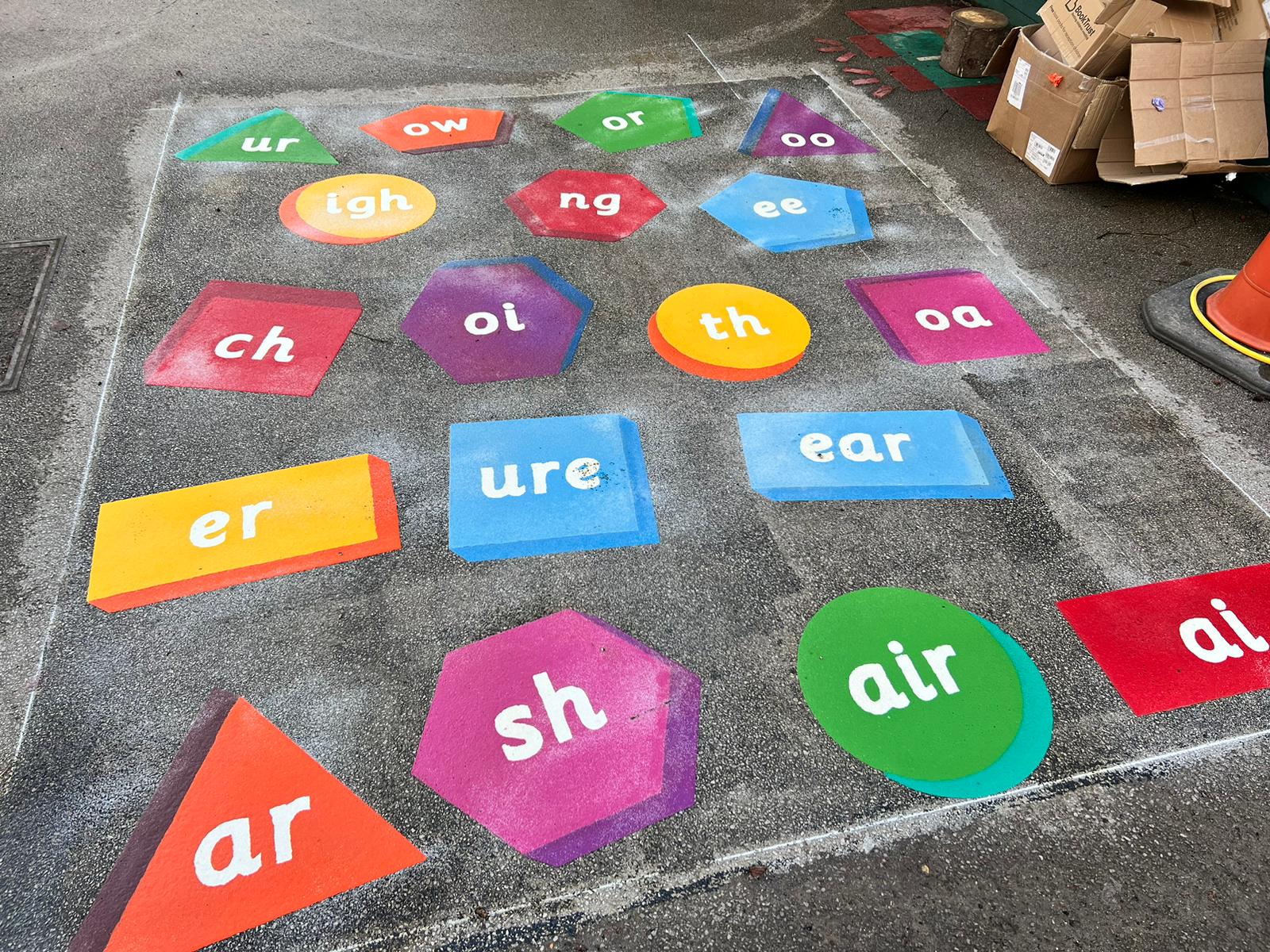
Enhancing Phonics Education with Phonic Markings
Enhanced Engagement: Phonic markings create an immersive learning experience, making phonics lessons more engaging and enjoyable for children. The vibrant