A Fun Guide to Learning and Playing with Playground Maths
Imagine a world where playgrounds become the stage for learning maths through exciting games and activities. Playground maths and mathematical playgrounds are redefining education by making numbers, shapes, and patterns fun and engaging. Let’s delve into how this combination of recreation and education can transform the way children perceive and learn maths.
What is Playground Maths?
Playground maths refers to the integration of mathematical concepts into outdoor play. It’s a hands-on approach where children engage with numbers, shapes, and problem-solving while playing. By turning traditional lessons into lively games, playground maths ignites a love for learning, helping children grasp complex ideas through physical activity.
Core Benefits of Playground Maths
- Cognitive Development: Engaging with mathematical activities on the playground stimulates memory and sharpens critical thinking skills.
- Problem-Solving Skills: Games encourage children to tackle challenges creatively and apply logical reasoning.
- Teamwork and Collaboration: Group activities teach communication and cooperative problem-solving, fostering social skills.
Key Concepts in Playground Maths
Arithmetic Activities
Arithmetic comes alive on the playground with activities like addition relay races and multiplication hopscotch. These engaging games make learning basic operations an enjoyable experience.
Fun with Patterns and Sequences
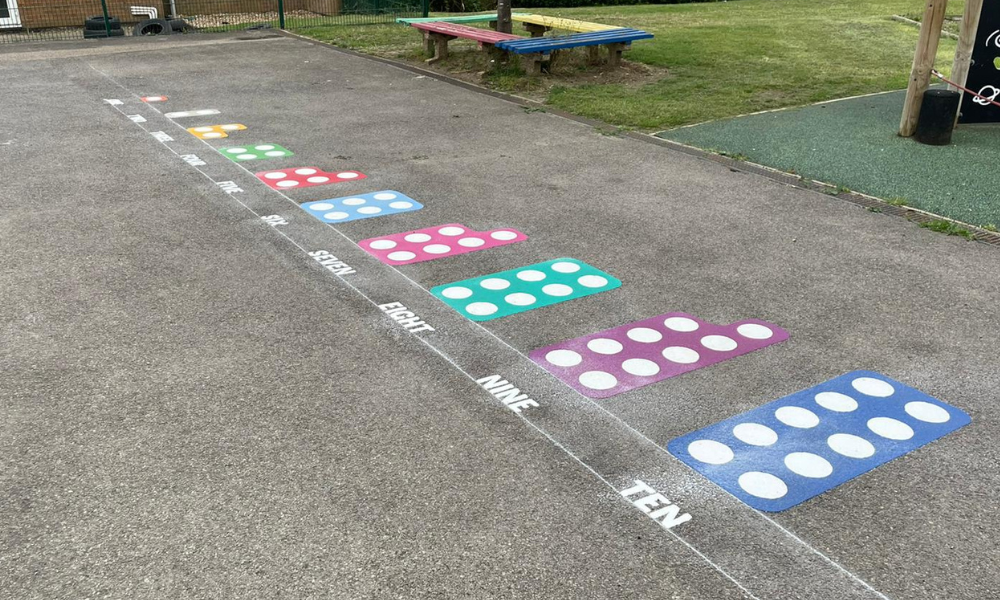
Children can develop their analytical skills by recognising and predicting patterns. For example, arranging objects in repeating sequences adds a creative twist to problem-solving. Playground markings such as number grids, playground shapes and patterns can help with encouraging this learning.
Examples of Playground Maths Activities
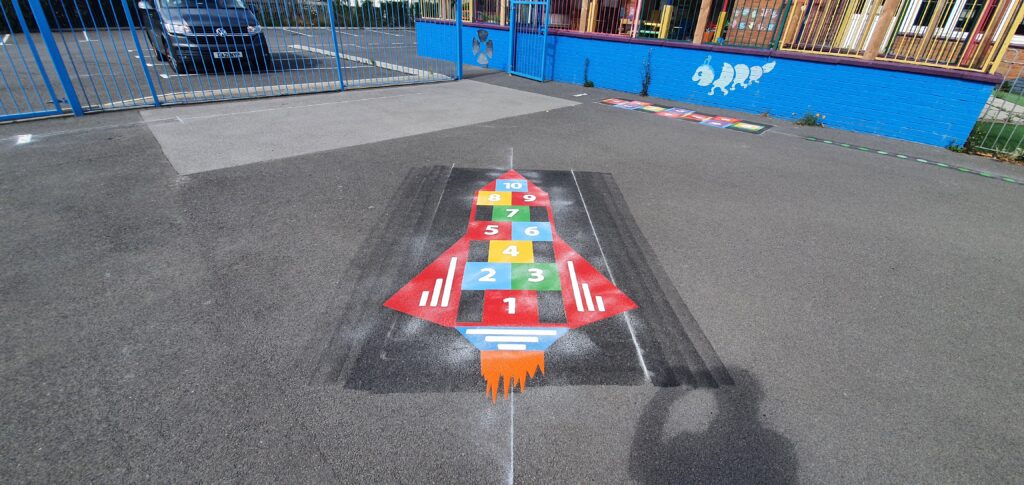
- Hopscotch with Numbers: Replace traditional hopscotch squares with sums or equations that children solve as they play.
- Counting Games: Use durable playground markings to have counting games in place for children of all ages.
- Estimation Games: Encourage children to guess the number of objects in a pile or the distance to a marker, then measure to check accuracy.
Designing a Mathematical Playground
Merging Creativity with Functionality
An effective mathematical playground combines fun and learning seamlessly. For example, numbered stepping stones or puzzle markings can transform simple structures into interactive learning tools.
Safety Considerations
Ensuring safety is paramount. Soft surfaces, non-slip materials, and sturdy equipment help reduce risks while enabling free play. Using materials such as thermoplastic for the markings promotes safety and non-slip materials.
How Mathematical Playgrounds Enhance Learning
Mathematical playgrounds make learning exciting by combining physical exercise with intellectual stimulation. Children engage their bodies and minds, encouraging creativity and exploration. Our team at Uniplay have worked with a huge number of schools and nurseries across the UK and have introduced mathematical playgrounds. We specialise in designing and installing unique markings that provide opportunities for play and learning for children of all ages and abilities.
To start your new maths playground project, get in touch with our team by calling 0333 321 6699 or email [email protected].
Ready to transform your playground?
A free design and a detailed quote, with no hidden costs and our price match promise.
- Free design and site survey
- No obligation
- Our own in-house installation team
More from the blog
A school's guide to maintaining playground markings
How schools can keep their thermoplastic playground markings safe, bright and long-lasting, from monthly inspections and gentle cleaning to repairs and an annual professional check.
Accept no imitation, we’re the specialists.
As the leading playground markings specialist in the UK, Uniplay are the thermoplastic graphic specialists.
Benefits of Creative Play in Early Years
Discover the benefits of creative play in early years and how EYFS playground markings support learning, imagination, and development through outdoor play.