Thermoplastic Road Markings: Benefits, Uses and Application
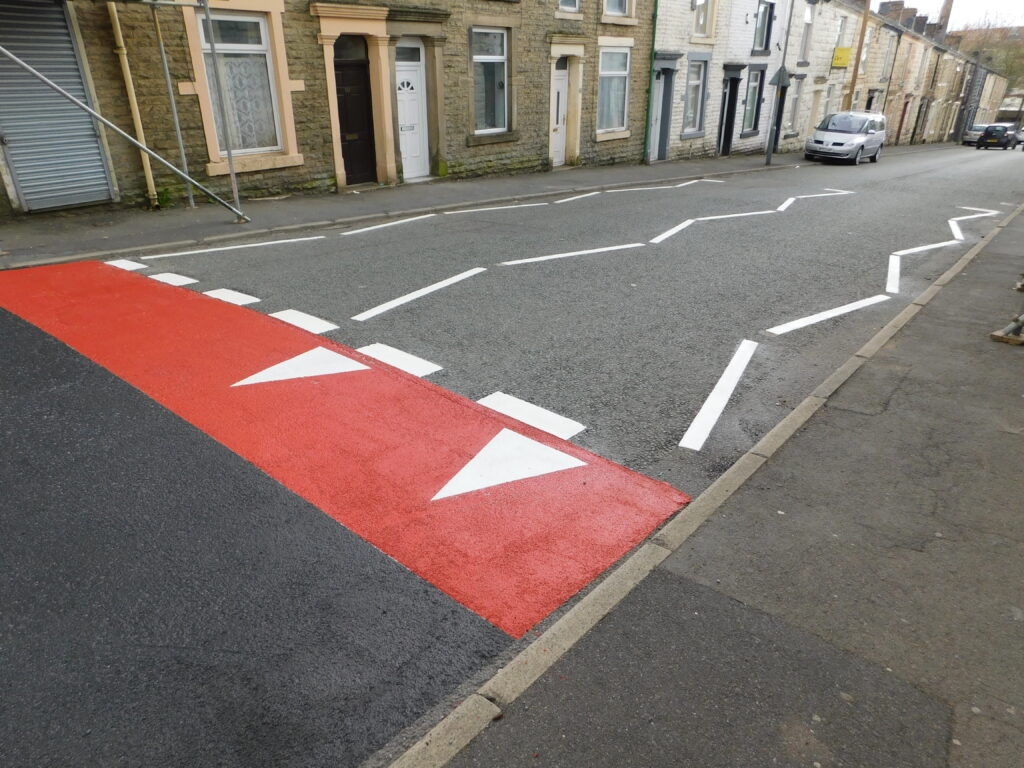
Thermoplastic road markings are lines, symbols and lettering made from synthetic resin mixed with glass beads, pigment and filler, which is heated until liquid and bonded onto tarmac or concrete. They are more reflective and more skid-resistant than ordinary road paint, and they last up to 10 times longer.
Our commercial team installs thermoplastic road and street markings for private clients, local councils and highways agencies across the UK. This guide answers the questions we are asked most often.
What are thermoplastic road markings made of?
Thermoplastic road markings are made of a synthetic resin premixed with glass beads, together with binders, pigment and filler material, which forms a solid compound that melts when heated and bonds to the road surface as it cools.
The glass beads reflect light from headlights back towards the driver, which is why these markings are described as reflectorised and stay visible at night and in poor weather. The beads also help to increase skid resistance.
How are thermoplastic road markings applied?
Thermoplastic road markings are applied by heating the compound to a high temperature until it becomes a uniform liquid, then laying it onto the prepared surface, where it forms a durable thermal bond with the tarmac or concrete.
On porous surfaces such as asphalt and concrete, the hot liquid also runs into the small holes in the surface and creates a mechanical lock, which adds to its durability. Lines can be hot-applied on site or supplied as preformed thermoplastic markings, pre-cut shapes and symbols that are heated into place for an accurate finish. Thermoplastic can also be applied in layers to create rumble strips, which give drivers physical feedback as they approach a danger spot.
Markings are ready for use within 30 minutes of application, so a road or car park can reopen quickly with minimal disruption. Thermoplastic suits new road construction and is just as useful for reviving old markings that have faded over time.
Why are thermoplastic road markings safer than paint?
Thermoplastic road markings are safer than paint because their glass beads make them highly reflective at night and in poor visibility, their surface is skid-resistant for drivers, cyclists and pedestrians, and they keep a clear, accurate edge.
Clear markings raise driver awareness and help prevent accidents and collisions. Unlike line paint, thermoplastic is unaffected by rain and UV light, so it keeps its colour and retro-reflectivity for years. It is also applied with high precision, which produces sharp, readable lines and symbols, whereas line painting is often messy and inaccurate and can lead to unplanned repair costs.
How long do thermoplastic road markings last compared with paint?
Thermoplastic road markings last up to 10 times longer than ordinary road paint, because the material bonds into the surface and stands up to heavy traffic and harsh weather that would wear a painted line away.
That durability is why thermoplastic is a popular choice for roads and car parks with high traffic and footfall. Fewer replacements mean less disruption to road users and less waste from repeated remarking. Our guide to highway thermoplastic markings versus line paint compares the two materials in more detail.
Are thermoplastic road markings cost-effective?
Thermoplastic road markings are cost-effective over their lifetime: the initial installation can cost more than paint, but because they last far longer and need little maintenance, they have to be replaced much less often.
The price of a scheme depends on the pigments, the application technique, the surface preparation needed and the size of the job. The most accurate way to price it is a site visit, after which we send a free, detailed quote. Our guide to thermoplastic pavement marking costs explains the main factors.
Where are thermoplastic road markings used?
Thermoplastic road markings are used wherever road users need clear, lasting guidance, from lane lines and pedestrian crossings on public roads to bays, arrows and walkways in car parks and on private sites.
- Roads and junctions: lane lines, stop bars, arrows, symbols and speed limit markings.
- Pedestrian and cycle routes: crossings, walkways and cycle lanes.
- Public transport: bus lanes and bus stops.
- Car parks: parking bays, disabled bays, arrows and access lines.
- Sensitive areas: warning markings around schools and hospitals, where drivers need information beyond roadside signs.
- Other sites: business parks, airport runways and playgrounds.
We have also used colour and creative designs on road safety projects to encourage all road users to take care. For schools, offices and commercial sites, our car park and line markings service covers bays, disabled bays, walkways and yellow lines.
Are thermoplastic road markings environmentally friendly?
Thermoplastic road markings are a lower-waste choice than paint, because the material is applied with heat rather than solvents, is laid efficiently with minimal waste, and needs replacing far less often over the life of the road.
Who installs thermoplastic road markings for councils and private sites?
Our commercial team installs thermoplastic road markings for private clients and as part of contracts with local councils and highways agencies, with design, manufacturing and installation handled by our in-house team at our Lancashire headquarters.
We understand the safety requirements for road traffic markings and can make recommendations to help you comply with local regulations. We offer site visits across the UK, whether you need a minor repair in an area with low visibility or new markings for a recently built road or site. If you are comparing firms, our guide to finding a road marking contractor in the UK sets out what to check. To speak to our team, call 0333 321 6699 or email [email protected].
Ready to transform your playground?
A free design and a detailed quote, with no hidden costs and our price match promise.
All prices include installation, and every quote is fully itemised.
- Free design and site survey
- No obligation
- Our own in-house installation team
More from the blog
Tips for choosing interactive playground markings
Our interactive playground markings are multi-purpose and can be used in a range of activities including education. However, we always advise the schools we
Traditional Playground Games: Why They Last and How to Play
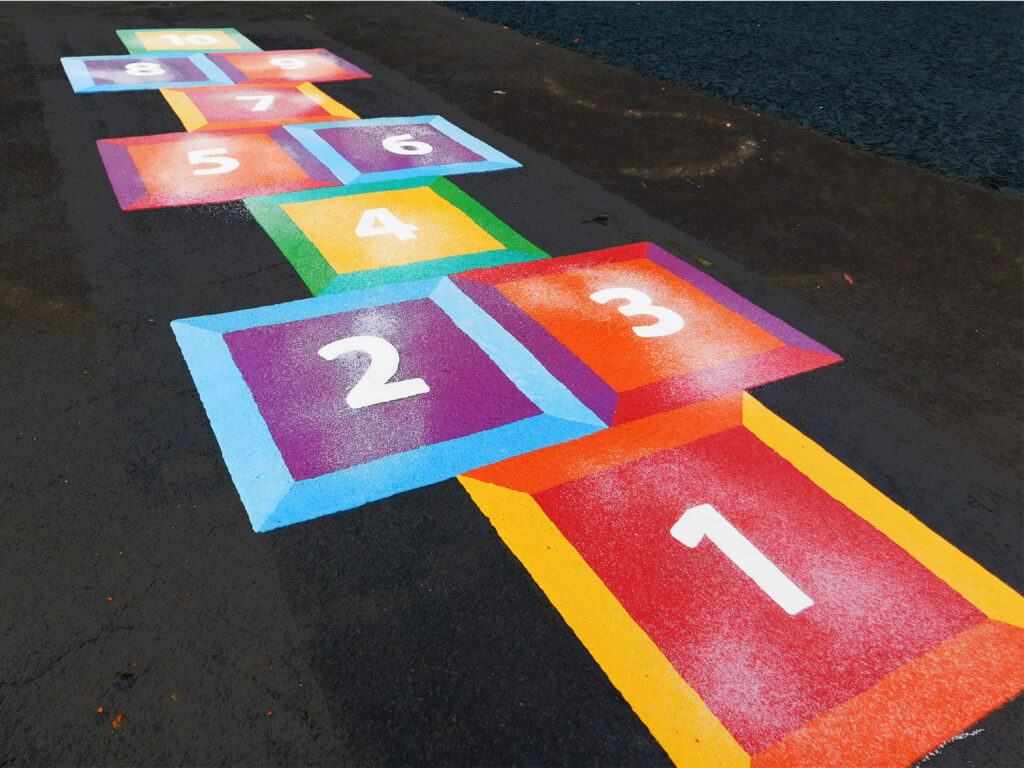
Why traditional playground games like hopscotch, duck duck goose and Twister stay popular, how to play them and how schools mark them out.
Walking into the Future: Celebrating Walk to School Week 2025
This week, from 19 to 23 May 2025, schools across the UK are lacing up their trainers for Walk to School Week, a national campaign led by Living Streets to promote healthier, greener, and more enjoyable s