
The Daily Mile: What It Is and How Schools Can Run It

The Daily Mile is a simple school initiative in which children run, jog or walk a mile every day, usually in around 15 minutes, at their own pace and in their school uniform. It aims to improve the physical, emotional and social health and wellbeing of children, whatever their age or personal circumstances.
We have marked out Daily Mile routes for schools and nurseries across the UK. This guide covers how the initiative works, where it came from, why schools use it and how a marked track helps it last.
What is The Daily Mile and how does it work in a school?
The Daily Mile works by taking children outside for around 15 minutes each school day to run, jog, walk or even skip laps of a set route until they have covered a mile, with no equipment, no PE kit and no staff training needed.
The main features are:
- Any time of day: the mile can be done during lessons, at break or at playtime, and many children take it on as independent play.
- No changing: children run in their uniforms, so there are no PE kits to manage.
- No rules to learn: children can walk, jog or run, and they do not need to be natural runners.
- Not a race: there is no rivalry or competitive racing, which keeps it sociable and inclusive.
- Light on staff: a well-placed route needs no more than one member of staff to supervise.
Teachers and parents often join in too, which lifts fitness across the whole school community.
Who started The Daily Mile?
Elaine Wyllie started The Daily Mile in February 2012 while headteacher of St Ninians Primary School in Scotland, after noticing that her pupils lacked fitness, and built it around a simple daily mile that any primary school or nursery could copy. The school reported that by the September of that year none of the children were classed as overweight.
Elaine, a Pride of Britain award winner, saw the idea spread well beyond her own school, and more than 10,000 schools and nurseries around the world have now taken part. More information about the initiative is available at thedailymile.co.uk.
What are the benefits of The Daily Mile for children?
The Daily Mile benefits children by building fitness and a healthy weight, improving concentration, mood and behaviour in class, supporting good mental health and giving every pupil, whatever their ability, a sociable way to be active each day.
- Physical health: around 15 minutes a day adds up to about 75 minutes over a school week. Regular activity helps children maintain a healthy weight, lowers the risk of conditions such as diabetes, and develops motor control and balance.
- Concentration and behaviour: a short burst of physical activity out of the classroom has been shown to stimulate learning and improve concentration, mood and behaviour.
- Mental health: regular activity has a positive influence on children's mental health, helping them feel happier and less stressed and reducing the risk of anxiety and depression.
- Inclusion: children who find team games intimidating, because of the rules or the competition, can take part on equal terms.
- Social skills: with no racing, children chat, run together and enjoy the fresh air, which builds friendships and teamwork.
- Healthy attitudes: doing it every day helps children understand why exercise matters, and regular exercise supports heart health, bone density and muscle strength as they grow.
Dr Richard Bailey of the International Council of Sport Science and Physical Education has said that "physically active children and young people perform better academically than their inactive peers and those who are most active benefit the most."
How does The Daily Mile help tackle childhood obesity?
The Daily Mile helps tackle childhood obesity by making moderate to vigorous activity a fixed part of every school day, rather than something that depends on the PE timetable, an after-school club or what children do at home.
The UK Chief Medical Officers recommend that children do at least 60 minutes of moderate to vigorous physical activity a day, and national guidance expects at least 30 minutes of that to happen during the school day. A daily mile of around 15 minutes covers half of that in-school time on its own, with no expensive equipment or specialist clothing.
The government's childhood obesity plan made the point that long-term, sustainable change will only come through the active engagement of schools, communities, families and individuals. Schools that work with children and their families to make fitness part of everyday life give that change the best chance, and a daily routine that children enjoy is a practical place to start.
How can a school set up The Daily Mile?
A school can set up The Daily Mile by choosing a safe loop on the playground or field, working out how many laps make a mile, and agreeing a daily slot for each class, letting children walk, jog or run at their own pace.
- Pick the route. Choose a loop that makes the best use of your space and that one member of staff can supervise easily.
- Measure it. Work out how many laps of the loop make a mile, so children and staff can count.
- Set the routine. Agree when each class goes out. Any time of day works, so fit it around your timetable.
- Keep it fun. Mix in running games such as Crocodile, where the class jogs in a line and the child at the back runs to the front, repeating until the mile is done.
- Celebrate effort. Encourage children to pace themselves and enjoy it, rather than race each other.
Do you need a marked track for The Daily Mile?
You do not need a marked track for The Daily Mile, but a permanent route makes it much easier to keep going, because children can see where to run, count their laps and head straight out without staff setting out cones first.
Our daily mile track markings are measured and marked to fit your space, often as several circuits that add up to a mile, in bright thermoplastic lines, footprints or spots. We developed our Daily Mile markings after consulting Elaine Wyllie, so we position each route to make the activity sustainable and easy to supervise. Because every design is bespoke, the track can follow a theme that appeals to your age range, or link up with school fitness trails and other playground markings so it becomes part of a wider active playground.
Researchers at Liverpool John Moores University have shown that changing children's play spaces can significantly increase activity levels over a sustained period, with the potential for important short and long-term health benefits. A marked track is an inexpensive way to make that change. Thermoplastic is anti-slip, so the track can be used all year round, and it is ready to use within 30 minutes of installation. Our markings carry a manufacturer's warranty of up to 4 years, subject to ground condition, and we have seen them last for over 10 years.
If you are working out how to pay for a track, our guide to PE and Sport Premium funding for playground markings explains which budgets usually cover new markings. To talk through a route for your school, call our team on 0333 321 6699.
See the full range in the brochure
Download the Uniplay brochure for our full thermoplastic range, from games and sports courts to sensory and educational markings. Get a free design and quote whenever you are ready.
All prices include installation, and every quote is fully itemised.
- Full range in one PDF
- No obligation
- Free design and quote when you are ready
More from the blog
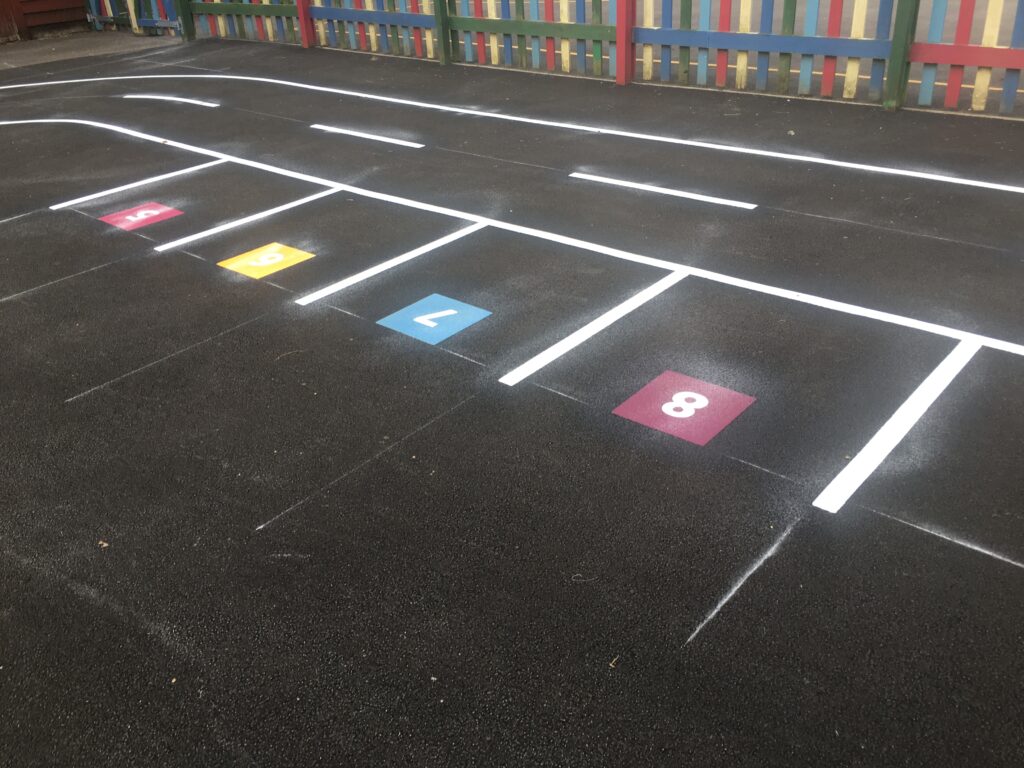
The Importance of Playground Lines in Playground design
When designing a playground, playground lines are more than just colourful decorations. These lines serve multiple purposes, from organising play activities
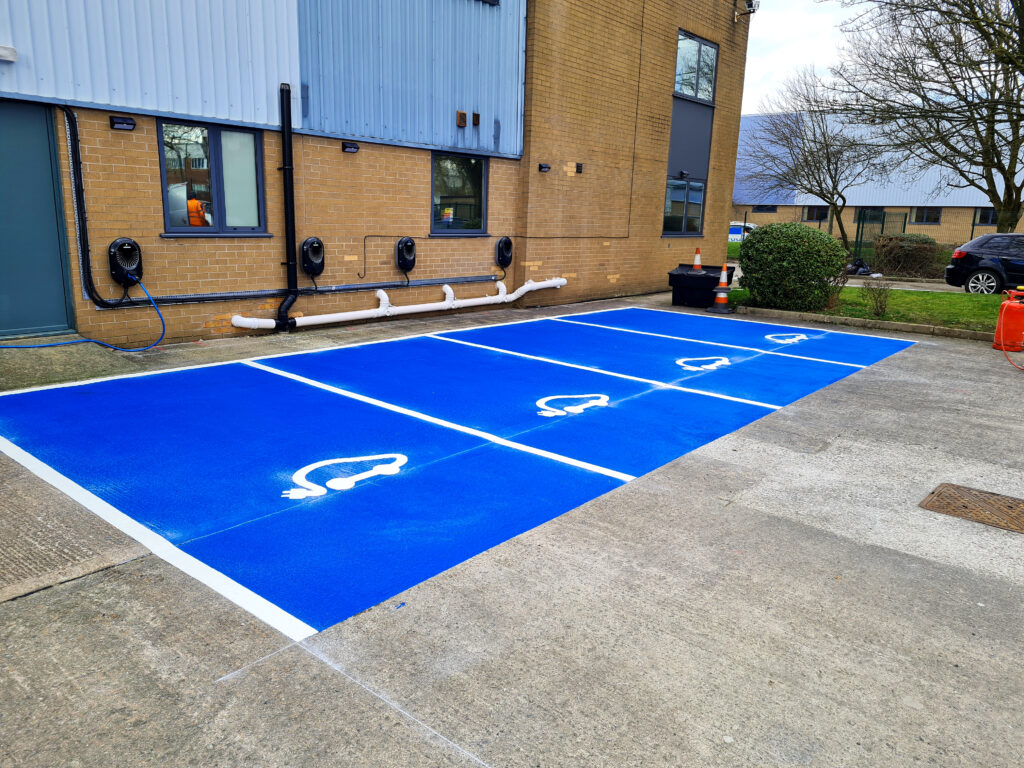
The importance of Thermoplastic EV Charging Bay Markings for driver safety
As electric vehicles (EVs) continue to gain popularity in the UK, it's becoming increasingly important for businesses and public places to provide charging
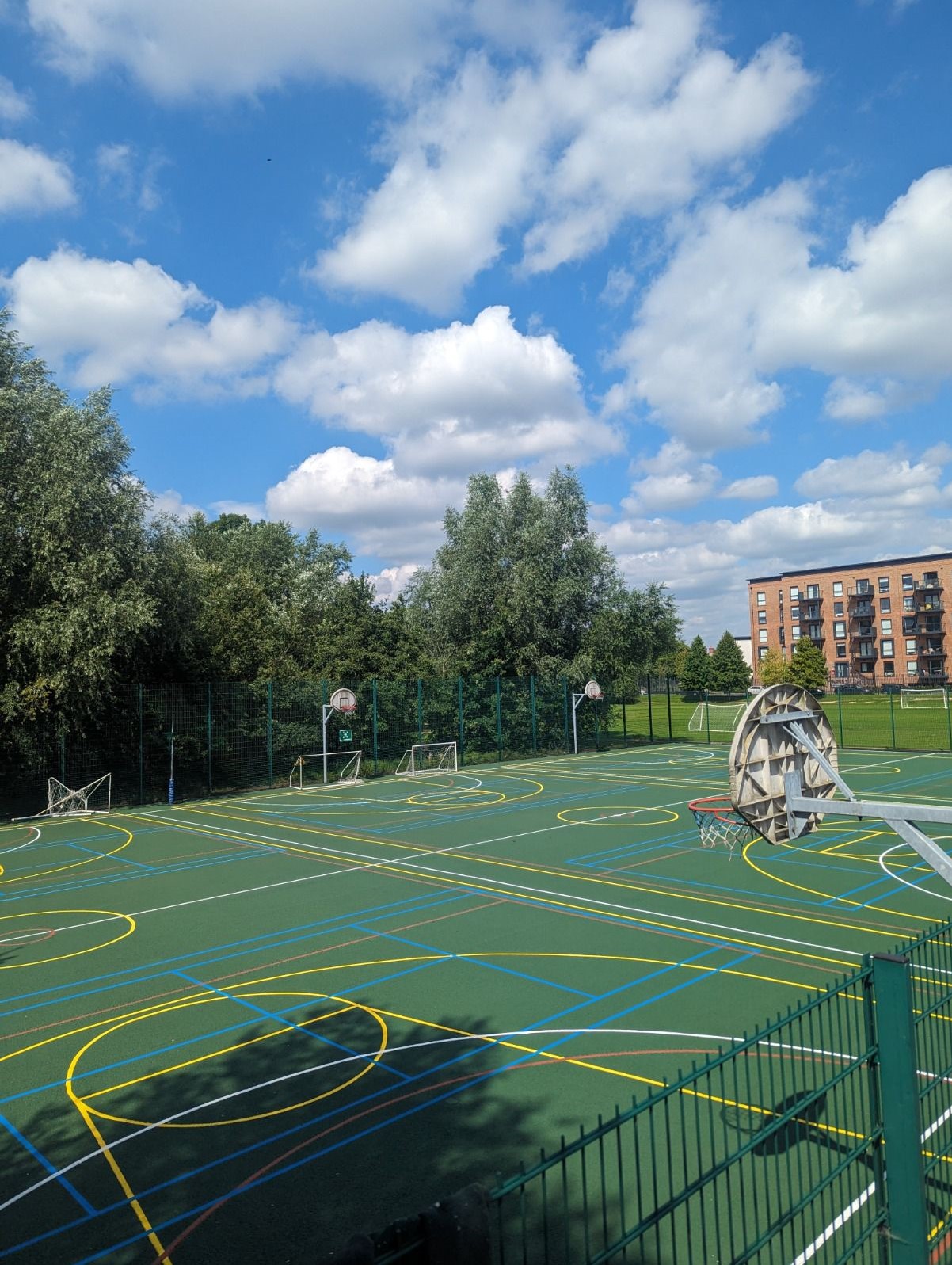
The Unbeatable Benefits of New Sports Coatings
The installation of new sports coatings is revolutionising sports courts across the country, offering benefits that go beyond the surface. There are a huge